Managers in business services centres
SSC, BPO, IT and R&D centres in Poland and CEE that report into a US head office. Team leads and site leaders who present, escalate and negotiate upwards in English every week.
This is a workshop for managers and teams in Europe who report into, or work every day with, American headquarters and stakeholders. For 12 years I worked for US tech companies, LinkedIn, Oracle and Pluralsight, running teams in Europe and the Middle East and reporting into American leadership. The workshop opens with one real situation from those years, lets participants diagnose it, gives them one light model, and then works on their own situations in trios. Everyone leaves with one prepared conversation with a US stakeholder and a plan for Monday. In English or Polish, in person in Poland, Dubai and across Europe, or online.
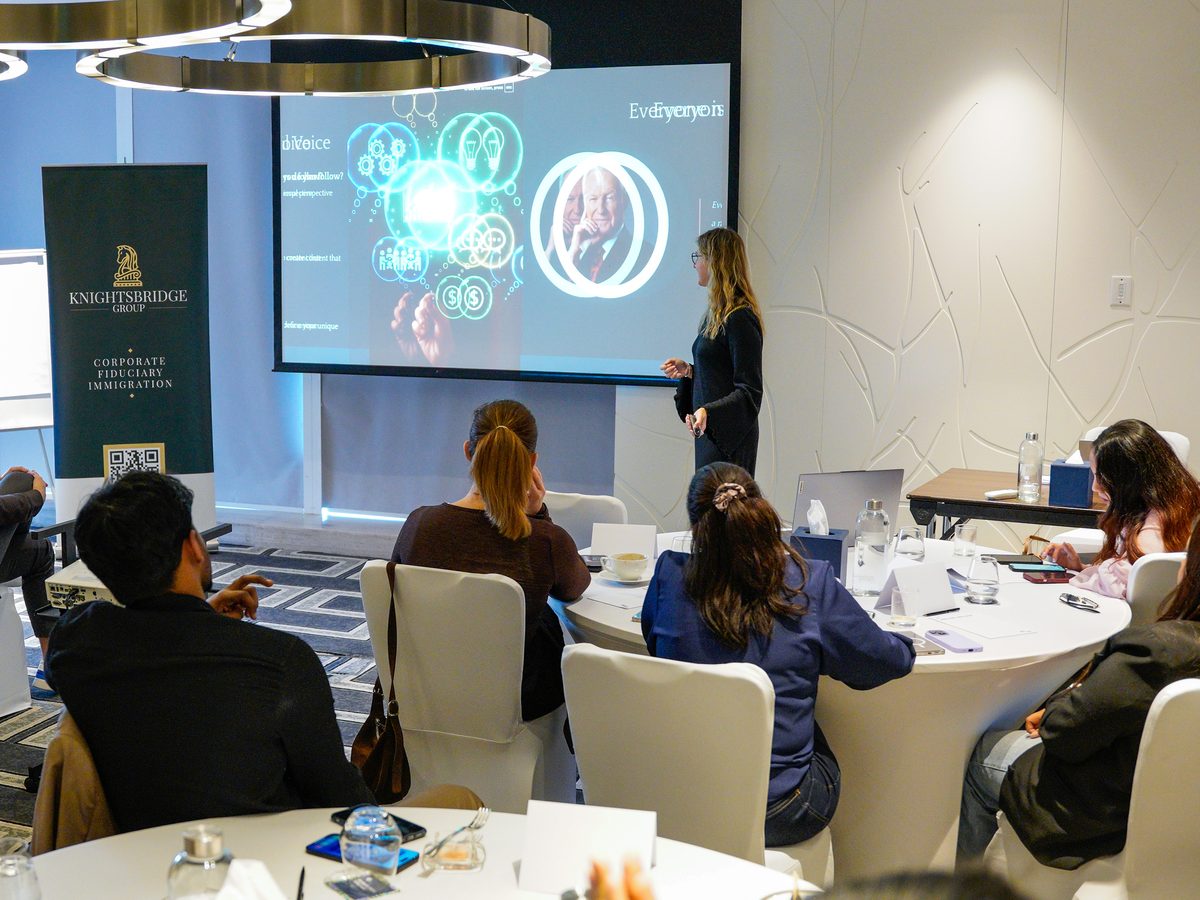
Team workshop for Knightsbridge Group.
Anyone whose plan, budget or promotion depends on a decision made eight time zones away by people who communicate differently than their own team does.
SSC, BPO, IT and R&D centres in Poland and CEE that report into a US head office. Team leads and site leaders who present, escalate and negotiate upwards in English every week.
Sales, customer success, delivery and product teams in the European subsidiaries of American companies, where the manager is in the US and the customer is in Europe.
People who report sideways and upwards across countries, with no line authority over the stakeholders they most need to move.
Booked by Heads of L&D, HR Directors, site leaders and training firms. Also runs as a leadership-team session for the management board of a European subsidiary.
I open with a real situation from my own years reporting into American leadership. I do not publish it here, because it works best when the room diagnoses it cold. Participants work out what went wrong, who misread whom and where, before I show any model.
Then one light model, never five. Then the part that matters: participants bring the situation they are actually in, a message that was ignored, a decision that keeps slipping, a "great" that did not feel great, and work on it in trios. One gives, one receives, one observes with a checklist. The session ends with a plan for Monday, not a certificate.
Three things, in this order. Each one comes from something I did, or got wrong, while reporting into the US from Dublin and Dubai.
How feedback, priorities and urgency sound when they come from an American manager, and what they actually mean. What a "yes" in a call is worth, and what "let's circle back" is telling you.
Practised on: a real message or meeting each participant brings
Asks, status, risks and bad news, written and said so the US side hears what you meant. Fewer words, earlier, with the decision you need at the top of the message instead of the bottom.
Practised on: one update or ask each participant has to send this month
How to disagree with head office early and plainly, say no without burning the relationship, and recognise disagreement that is never said out loud. This part also runs as its own workshop, Disagreement across cultures, and travels well to teams in the Gulf.
As Head of LinkedIn Learning for MENA, she brought a rare blend of strategic clarity, empathy, and adaptability that transformed our team.Amin Atwa, reported to Alicja at LinkedIn
Built on 12 years working for US tech companies, reporting into American leadership from Europe and the Middle East, and leading teams made up of people from more than 20 cultures.
With a named US stakeholder, scripted and rehearsed in the room, about the thing that is stuck right now.
Their own stakeholders mapped on it, so they can reread a message before they send it.
Three things they will do differently this week, written down and shared with a partner from the room.
For the sponsor: a short note after the session on what the room struggled with most, and what I would do next if it were my team.
Group size and scope are agreed on a short diagnosis call with the sponsor before anything is designed.
The case, the model and one exercise. For a leadership event, an internal leadership series or an ABSL-style community session.
Between sessions participants practise on their own situations and come back with what worked and what did not.
The full programme with trios on every topic. In Poland, Dubai or wherever your team sits.
Delivered in English or Polish. Polish groups usually book it as "współpraca z centralą w USA".
Most cross-cultural training is academic, or delivered by trainers who never carried a number. I reported into American leadership while carrying a number in Europe and the Middle East, worked closely with Vista Equity Partners, and led teams from more than 20 cultures. This is the US relationship from the inside.
Her knowledge is exceptional, and her experience working at LinkedIn gave us insights you simply won't get from a typical trainer. …One thing everyone noticed was that Alicja personally greeted every attendee before the workshop started.
Paulina Schulte, IMCMSenior Client Advisor · team workshop via LinkedIn
She ran the business like a true sales leader: clear GTM, smart coverage, clean operating rhythm, and a forecast I could trust.
Arda AtalayRegional Director at LinkedIn · managed Alicja
Most workshops are bought by one person and approved by another. The one-page overview is written for the second person: what the workshop is, who it is for, what people leave with, the three formats and who I am. One PDF, no slides.
I use your email to send the PDF and, if you reply, to continue the conversation. No newsletter, no sequence.
Who reports into whom, what keeps going wrong, and when you would want to run it. I read every brief myself and reply with a first idea and an honest view on whether I am the right person for it. The full 60-second brief builder is on the workshops page.
Send a brief, request the one-pager, or book 30 minutes and tell me what is happening between your team and head office. You will leave the call with at least one idea you can use, whether or not we work together.
Pracuję po polsku i po angielsku. I work in Polish and English.